
Use food-storage temperatures as the target
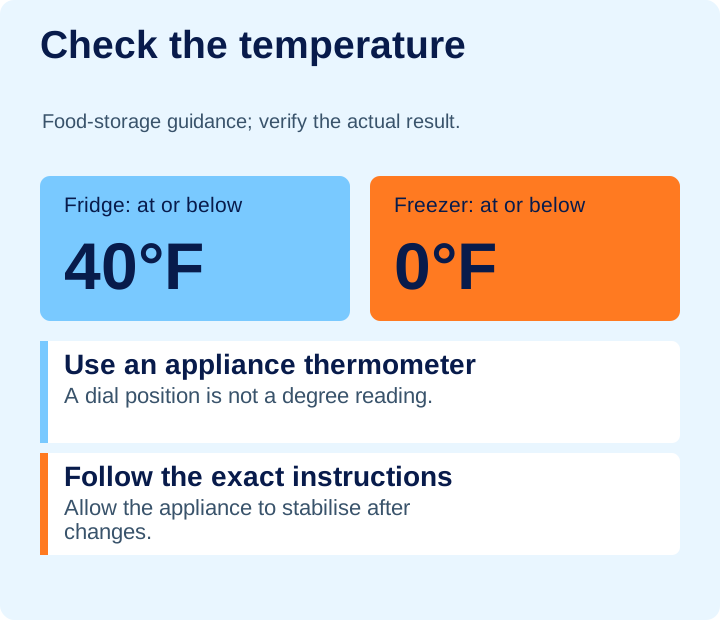
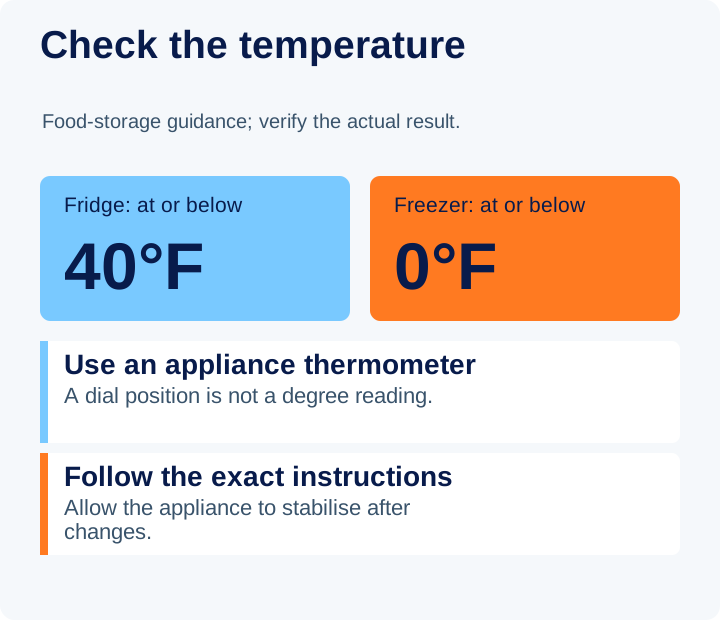
FDA guidance calls for a refrigerator temperature of 40°F or below and a freezer temperature of 0°F or below. Those are temperature targets for the actual storage space, not labels for a thermostat dial. Keep a thermometer in the appliance so you can check it.
A colder setting is not automatically better for every refrigerated item. Food can freeze in parts of a refrigerator, and a badly placed load or unsuitable room can affect operation. Follow the model’s loading and airflow guidance and the storage instructions for the food.
A small internal ice compartment may have limitations that differ from a separate freezer. Check the documented storage purpose before relying on it for a regular supply of frozen food.
Why “set it to 3” is not a universal answer
Manufacturers use different control scales and starting recommendations. A number can represent a relative cooling setting; it is not a Fahrenheit or Celsius value. Check the control instructions for the exact model before adjusting it.
Start at the recommended position, allow the specified stabilisation period and check the thermometer. If an adjustment is needed, make it in the direction and increments described by the manual. Opening the door repeatedly while waiting can interfere with the check.
For a fridge-freezer with a shared control arrangement, a change may affect both compartments. Do not assume independent temperature control just because there are two doors. Check the actual controls and confirm both storage areas.
A practical temperature-check routine
After delivery, follow the transport, standing and start-up instructions first. Let the appliance reach stable conditions before adding perishable food. Use the thermometer’s instructions and the refrigerator manual to place the instrument appropriately.
Check temperatures under ordinary use, including after the fridge is stocked. Leave the airflow paths clear and avoid overpacking. If a particular area freezes food or stays too warm, review placement and loading rather than assuming the control setting alone explains everything.
- Confirm the exact model and control instructions.
- Check the room is within the appliance’s operating limits.
- Verify ventilation, levelling and door closure.
- Allow stabilisation and measure the actual storage temperature.
- Record changes so you can describe a problem to support.
If food is too warm or starts freezing
Check whether the door is closing properly, the seal is clean and packaging is obstructing it. Confirm that the appliance has its required ventilation and is operating in a suitable room. Review the thermostat and loading instructions.
If the fridge cannot maintain suitable temperatures after these checks, protect the food and contact the manufacturer or seller. Do not rely on appearance or smell to establish that perishable food has stayed safe. Food exposed to unsafe conditions needs food-safety guidance, not a promise from a product review.
Power outages and lengthy periods above safe temperatures require separate food-safety decisions. The FDA guidance linked in the source register explains time and temperature considerations. Do not taste food to decide whether it is safe.
Evidence and source notes ↗A drinks cooler or personal cooler is a different question
An advertised beverage-cooler range does not establish consistent food-storage performance. We assess the drinks models for sealed beverages; use a dedicated food refrigerator when perishables are the main job.
Thermoelectric coolers may specify cooling relative to ambient temperature. A warmer room can therefore change what they can achieve. Check the exact limits and intended use rather than assuming a small cooler provides the same storage conditions as a compressor food refrigerator.
Record a pattern that is useful to act on
Do not keep unsafe food while waiting for a pattern to emerge. If temperatures do not meet food-storage requirements, move perishables to suitable storage and follow authoritative food-safety guidance. Use the exact model’s troubleshooting/support process rather than compensating indefinitely with a colder dial number.
| Record | Why it helps |
|---|---|
| Exact model and control setting | Numbers on different thermostat dials are not interchangeable. |
| Thermometer location and reading | One spot may not represent every shelf or compartment. Follow the thermometer and appliance instructions. |
| Recent loading, door opening and room conditions | These details help separate a changed use pattern from a persistent problem. |
| What changed before a later reading | Changing several settings or loads at once makes the cause harder to identify. |
Questions before you choose
Is the highest dial number always the coldest?
Do not assume so. Read the exact model’s control instructions. The scale is a control setting, not a temperature reading.
What temperature should the freezer be?
FDA guidance calls for 0°F or below. Verify the actual compartment temperature and make sure it is intended for the frozen storage you need.
How long should I wait after adjusting the dial?
Follow the manufacturer’s stabilisation instructions for your model. There is no universal period established by this guide.